New surface and handover slip testing

A product data sheet tells you how a sample performed in a laboratory. It doesn't tell you how the floor performs once it's installed, sealed and finished on your site. In-situ testing measures the surface people will actually walk on.

Hand over a documented, dated record of the installed surfaces

Who it's for

Builders, project managers, flooring contractors, architects, developers and strata committees taking over new common areas.

Why test before handover

Find out whether a finish meets the specified rating while it can still be fixed

Check that sealers and coatings haven't reduced slip resistance

Hand over a documented, dated record of the installed surfaces

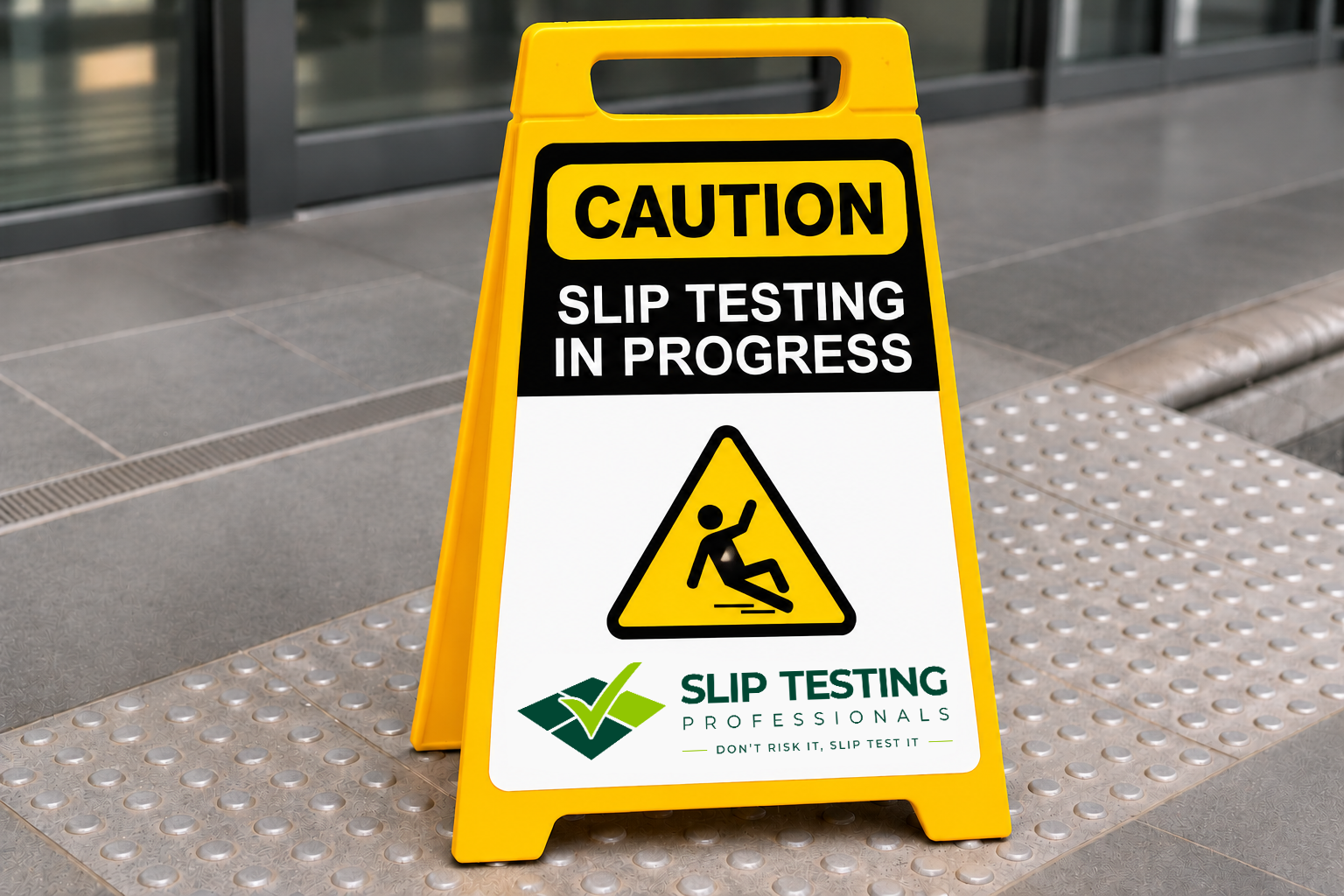
Slip testing in progress sign on a tiled walkway

Slip resistance and the NCC

The National Construction Code sets minimum slip resistance classifications, assessed under AS 4586, for stair treads, nosing strips, landings and ramps. For example, stair treads and nosing strips generally need at least P3 where dry and P4 where they may get wet, with higher ratings for steeper ramps. For other areas, the Standards Australia handbook SA HB 198:2014 recommends classifications based on how the space is used. Your certifier and the current NCC are the final reference for your project.

Before you book

Check whether your certifier, specification or contract requires a NATA-endorsed report. Slip Testing Professionals is not currently NATA accredited, so if a NATA-endorsed report is required, let us know and we'll be upfront about whether we're the right fit.

Common questions

What rating does my floor need?

When should handover testing be done?

What happens if the floor doesn't meet the specified rating?

Is the product's slip rating enough for handover?

Don't Risk It, Slip Test It

Find out how your floors measure up.

Tell us about your property or project and we'll come back with the right test and a quote.