
Don't Risk It, Slip Test It
Slip resistance testing
across NSW
Find out how slippery your floors really are.
We test pedestrian surfaces on site using the wet pendulum test method set out in AS 4663 and AS 4586. You get measured results for every area we test, with a photo of each test location.
Wollongong and Illawarra · Greater Sydney · Central Coast · Newcastle and the Hunter
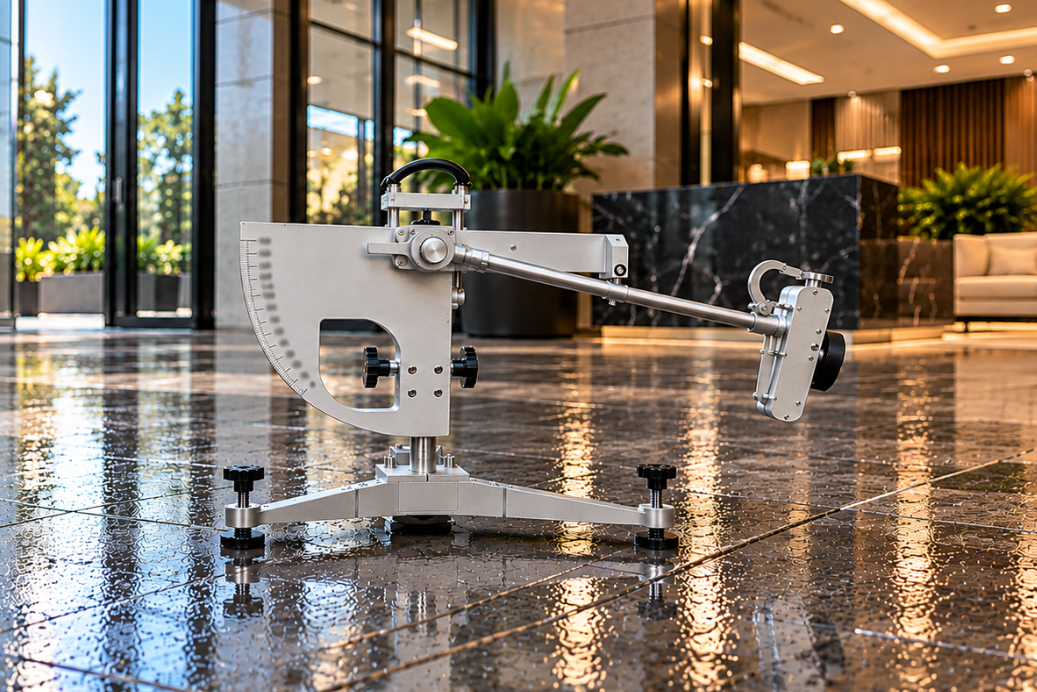
On-site testing across NSW
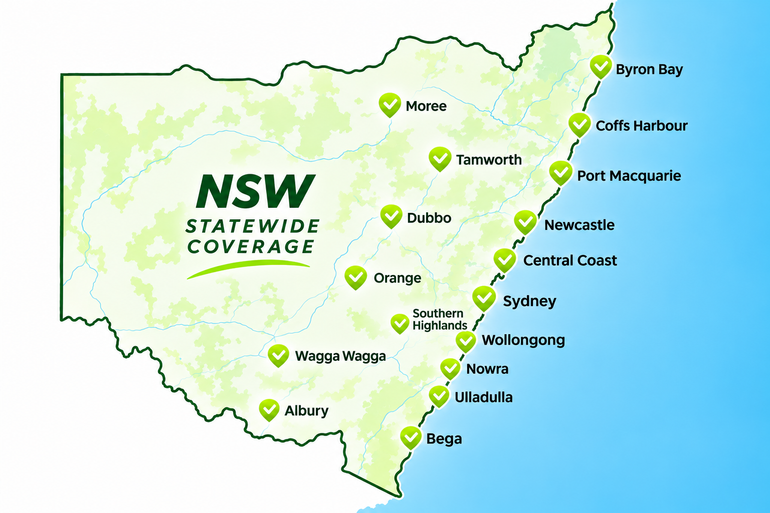
We come to you anywhere in NSW, from the South Coast and Southern Highlands to Sydney and the Hunter.
Results for every test location
Every area we test is measured, recorded and photographed.
Reports you can rely on
Every report states the standard, method and slider used, and is signed off by the technician.

The problem
Slip and fall claims, injured visitors and staff, and floors that have changed since they were installed.
The solution
Measured slip resistance results for every area, so you can fix problem surfaces before someone gets hurt.

A slip costs far more than a slip test
Slips and falls are among the most common causes of injury in workplaces and public places. Floors also change over time. Tiles wear smooth, sealers break down and cleaning products leave residue. A floor that was fine at handover can become a hazard after a few years of foot traffic.
Slip resistance testing gives you measured data to:
Check whether a surface suits how it's used
Find problem areas before someone gets hurt
Confirm whether a clean, treatment or resurface has worked
Keep a dated record for your WHS, maintenance and risk files
Our slip testing services

Wet pendulum testing
The standard Australian test for surfaces that can get wet. Results are classified from P0 to P5.

New surface and handover testing
On-site testing of newly installed flooring against the slip rating in your specification.

Existing surface testing
Testing of floors already in use, for risk assessment, maintenance planning and monitoring over time
Slip testing for the surfaces people use every day
Pool surrounds and wet areas
Entries, foyers and lobbies
Stairs, ramps and landings
Bathrooms, change rooms and amenities
Commercial kitchens and food areas
Balconies, outdoor paths and playgrounds
Car parks, pick-up bays and painted surfaces
Train platforms and public transport areas
Shared paths and bike lanes
Our testing measures pedestrian slip resistance. It doesn't assess vehicle or bicycle skid resistance, or playground impact attenuation, which use different standards.
Every type of pedestrian surface
Different materials lose grip in different ways. We test the finished surface as it's installed and used, whatever it's made of.
Ceramic and porcelain tiles
Glazed, matt and textured tiles in entries, bathrooms and wet areas.
Natural stone
Marble, granite, travertine and sandstone, inside and out.
Polished and sealed concrete
Polished, honed and sealed concrete in retail, warehouses and car parks.
Timber and decking
Timber floors, stair treads and outdoor decking.
Vinyl and rubber flooring
Sheet vinyl, vinyl planks and rubber flooring in commercial spaces.
Painted surfaces and line marking
Painted bitumen, line marking, pedestrian crossings and coloured surface treatments.
Epoxy and floor coatings
Epoxy, polyurethane and anti-slip coatings in workshops, kitchens and car parks.
Metal, glass and stair nosings
Metal plates, stair nosings, glass floors and treads.
Slip ratings explained
What your P rating means
The wet pendulum test gives a surface a slip resistance classification from P0 to P5. The higher the rating, the lower the floor's contribution to the risk of slipping when wet.
Tap a rating to see where it's typically used
Typical applications
P0 · below 12 BPN
Not recommended for areas where people walk when wet.
Contribution to slip risk: Extremely high
Typical applications
P1 · 12 to 24 BPN
Dry internal areas such as lift lobbies and common areas of public buildings.
Contribution to slip risk: Very high
Typical applications
P2 · 25 to 34 BPN
Hotel apartment bathrooms, ensuites, kitchens and laundries.
Contribution to slip risk: High
Typical applications
P3 · 35 to 44 BPN
Dry stair treads, nosings and landings; dry ramps up to 1:14; undercover car parks.
Contribution to slip risk: Moderate
Typical applications
P4 · 45 to 54 BPN
Stair treads, nosings and landings that may get wet; wet ramps up to 1:14; dry ramps steeper than 1:14; pool surrounds.
Contribution to slip risk: Low
Typical applications
P5 · above 54 BPN
Commercial kitchens, undercover loading docks, wet ramps steeper than 1:14.
Contribution to slip risk: Very low
Classifications from AS 4586-2013 (Slider 96). Typical applications are examples only, not a complete list, and are based on the National Construction Code and SA HB 198:2014. The rating an area needs depends on where it is and how it's used.
How slip testing works
1
Tell us about your site
The address, the surfaces and areas you need tested, and why: a risk check, a handover, a specification or an incident.
2
We confirm the method and quote
We recommend the right test method and standard, the number of test locations, access and timing.
3
We test on site
We take measurements at each agreed location, record the surface conditions and photograph every test area.
4
You receive your report
Readings and the mean BPN for each location, with a photo of every test area.
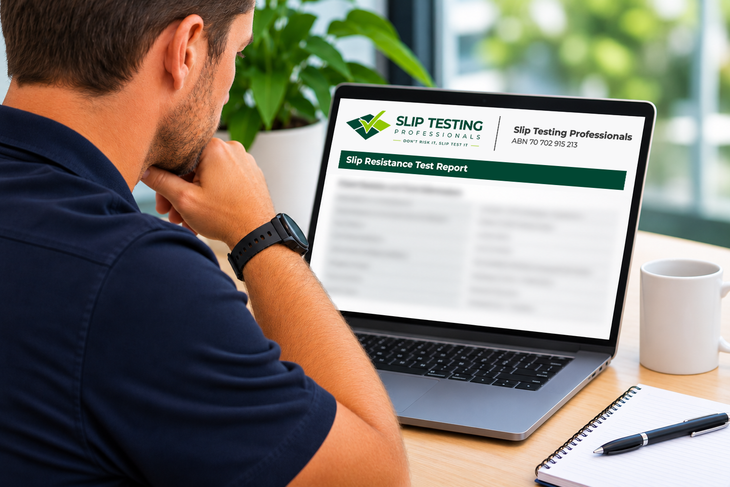
Reports you can actually use
Every report connects the results to the exact spot we tested, so you know which areas are performing and which need attention.
Each report includes:
The property, test location and surface type
The standard, test method and slider used
Check whether a surface suits how it's used
Conditions on the day, including temperature, weather and slope
Five readings and the mean BPN for each test area
A photo of every test area
The tester name and sign off
Slip testing across NSW
We test anywhere in NSW, including Sydney, the Illawarra, the South Coast and Shoalhaven, the Southern Highlands, the Central Coast, Newcastle and the Hunter, and regional centres across the state.
Common questions
What is slip resistance testing?
Slip resistance testing measures how much grip a pedestrian surface provides, using standard equipment and methods. In Australia, it's done under AS 4586 for new surfaces and AS 4663 for existing surfaces.
Do you offer dry floor friction testing?
Not at this stage. We specialise in wet pendulum testing, the most widely used slip resistance test in Australia and the standard test for surfaces that can get wet. If your specification also requires dry floor friction testing, let us know when you enquire.
Where do you provide slip testing?
We provide on-site slip testing across NSW, including Wollongong and the Illawarra, the South Coast and Shoalhaven, the Southern Highlands, Sydney, the Central Coast, and Newcastle and the Hunter.
What's the difference between AS 4586 and AS 4663?
AS 4586-2013 classifies the slip resistance of new pedestrian surface materials and is the standard the National Construction Code refers to. AS 4663-2013 measures the slip resistance of existing surfaces that have been in use. The surface and the reason for testing determine which standard applies.
Is Slip Testing Professionals NATA accredited?
No. Slip Testing Professionals is not currently NATA accredited and cannot issue NATA-endorsed reports. Our owners are completing specialist training and are working towards accreditation, which is subject to NATA's assessment and approval. If your specification, certifier or legal matter requires a NATA-endorsed report, please tell us before booking.
What surfaces can you test?
Most pedestrian surfaces, inside and out: ceramic and porcelain tiles, natural stone, polished and sealed concrete, timber and decking, vinyl and rubber, painted surfaces and line marking, epoxy coatings, and metal or glass treads.
Don't Risk It, Slip Test It
Find out how your floors measure up.
Tell us about your property or project and we'll come back with the right test and a quote.